
Dental Implants are the most advanced and durable solution available today for replacing missing teeth. They are designed to function like natural tooth roots, providing unmatched stability, preventing bone loss, and offering a restoration that looks, feels, and performs exactly like a natural tooth. At Dr 7 Family Dentistry, we provide comprehensive implant planning, placement, and restoration to give you a strong, complete, and lifelong smile.
A dental implant is a small, biocompatible titanium post that is surgically placed into the jawbone beneath the gum tissue. This post serves as the replacement for the tooth root. Once the implant fuses with the jawbone (a process called osseointegration), it provides a permanent anchor for a custom-made prosthetic tooth. A complete implant restoration has three main components:
Implants can be used to replace a single tooth, multiple teeth (implant-supported bridges), or a full arch (implant-supported dentures).
Unlike bridges or dentures, the implant post stimulates the jawbone, preventing the bone deterioration (resorption) that naturally occurs after tooth loss.
Implants are fixed permanently and provide a biting force equal to natural teeth, allowing you to eat all your favorite foods without worry or discomfort.
Replacing a missing tooth with an implant does not require grinding down the neighboring teeth, as a bridge does, thereby preserving the health of those teeth.
With proper care, the implant post itself can last a lifetime, making it the most durable and cost-effective restoration in the long run.
Implant therapy is a planned, multi-stage process designed for optimal success:
We use advanced 3D Cone Beam CT (CBCT) imaging to assess bone density, map the exact placement site, and avoid nerves and sinuses. This step ensures predictable, safe surgery.
The titanium post is surgically placed into the jawbone under local anesthesia (and often sedation). The gum tissue is closed over the implant, and a healing period of 3–6 months begins to allow for osseointegration.
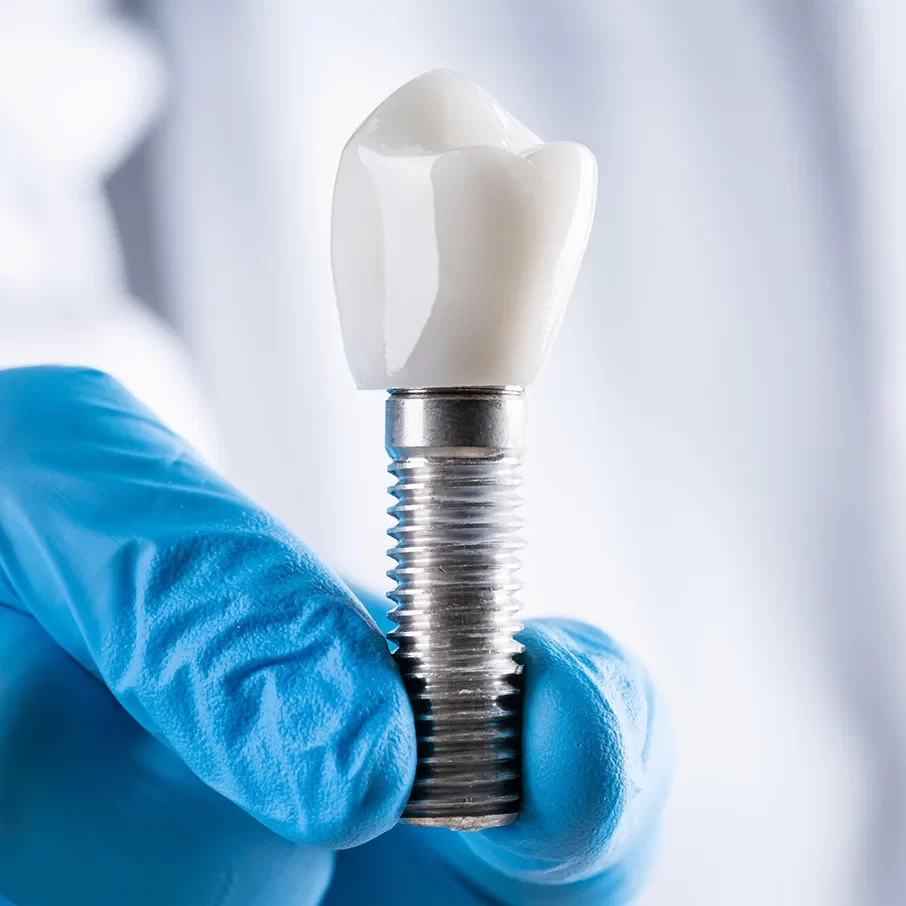
Once the implant has fused with the bone, a minor procedure is performed to expose the implant and attach the abutment (connector post).
Final impressions are taken. A custom, porcelain crown is fabricated in the lab and permanently attached to the abutment, completing the restoration.
Implants are the preferred treatment for most missing teeth, and ideal candidates generally:
Need replacement for gaps that compromise function or aesthetics.
Possess enough healthy jawbone structure to securely hold the titanium post (or are candidates for a bone grafting procedure to build volume).
Are free of untreated periodontal disease.
Prefer a fixed, non-removable, and long-lasting replacement option over a bridge or denture.
Dental implant treatment typically involves two phases: surgical placement and prosthetic restoration. Implants are often considered a major restorative procedure and may receive partial coverage from dental insurance, typically ranging from 10% to 50%, depending on the plan. Sometimes, aspects of the surgical procedure or related bone grafting may be covered under medical insurance. Dr 7 Family Dentistry will provide a detailed cost estimate and assist with insurance claims. We emphasize that while the initial cost is higher, the value of implants—their permanence and ability to prevent bone loss—makes them the most cost-effective long-term investment.
At Dr7 Family Dentistry, our dentists are committed to providing high-quality, patient-focused dental care for individuals and families in Thornhill. We take a thoughtful approach to dentistry, focusing on clear communication, comfort, and treatment plans tailored to each patient’s needs.
Our team has experience across preventive, restorative, cosmetic, and emergency dentistry. We proudly accept the Canadian Dental Care Plan (CDCP) for eligible patients and help guide you through coverage details and treatment options before care begins.
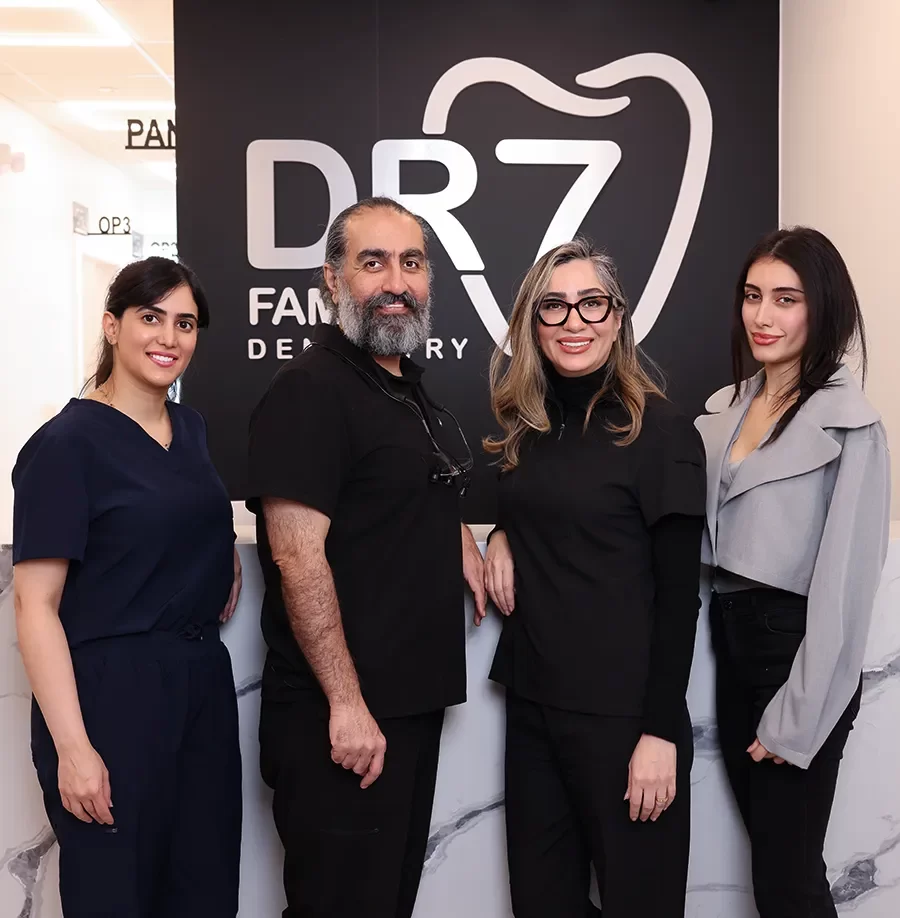
At Dr7 Family Dentistry, we focus on providing reliable, patient-centred dental care for individuals and families in Thornhill. Our approach is built on clear communication, thoughtful treatment planning, and consistent care that supports long-term oral health.
Our clinic uses up-to-date dental technology to support accurate diagnoses, efficient treatment, and patient comfort during every visit.
Our dentists and clinical staff bring experience across preventive, family, restorative, cosmetic, and emergency dentistry. We take the time to assess your needs carefully and explain treatment options clearly.
We accept most dental insurance plans and proudly participate in the Canadian Dental Care Plan (CDCP) for eligible patients. Our team explains coverage and costs in advance so you can make informed decisions with confidence.
We offer flexible scheduling and emergency dental appointments when available to help address urgent dental concerns without unnecessary delays.


No. Implant placement is performed under local anesthesia and often sedation, so you will feel no pain during the surgery. Post-operative discomfort is managed with prescribed medication and is typically comparable to a simple tooth extraction.
The total timeline, from placement to final crown, usually takes 4 to 9 months. The longest part is the 3–6 month healing period required for the implant to fuse securely with the jawbone.
You care for an implant crown just like a natural tooth: regular brushing, flossing, and routine dental check-ups and cleanings. Unlike a natural tooth, implants cannot get cavities, but they can still be affected by gum disease (peri-implantitis).
Dental implants have a very high success rate (over 95%). Failure is rare but can occur if a patient smokes heavily, has uncontrolled diabetes, or develops a severe infection (peri-implantitis) due to poor hygiene.